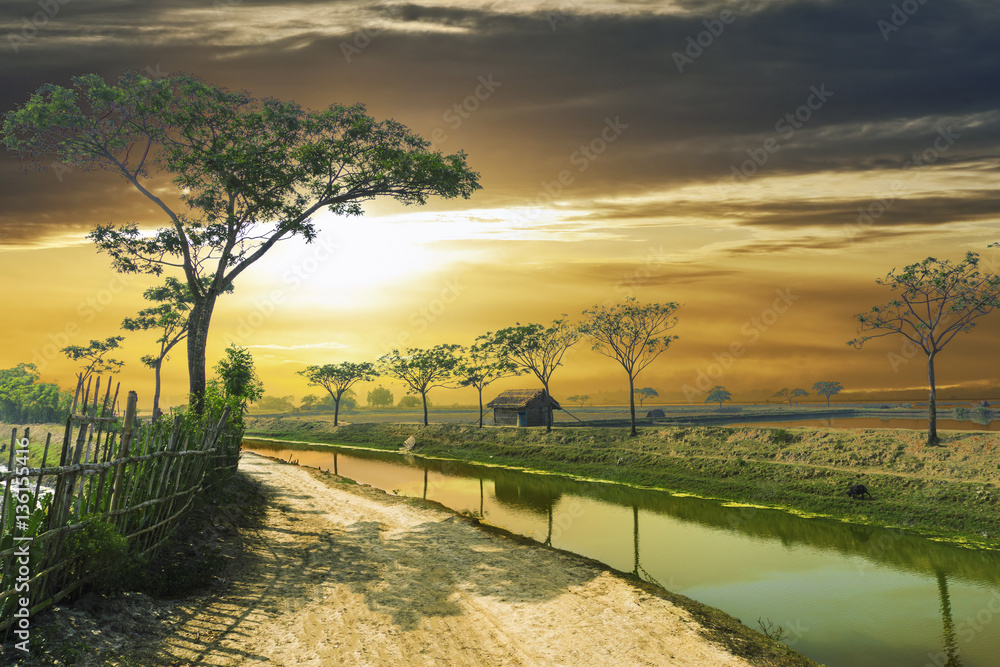
Riaz Osmani
03 June 2023
Bangladesh’s emergence as a country and her political, economic and social journey ever since.
- Partition of the Indian Subcontinent also known as British India
- Why did Muslim Indians want a separate country of their own?
- Dismemberment of Pakistan and the forgotten genocide
- A heavy price indeed! Religious genocide by Muslims on Muslims and Hindus
- Mukti Bahini and India
- Stuff of parody?
- The quest for Bangladesh’s independence began with the right to speak and use the Bangla language
- Discrimination, Racism, Hindu phobia and cultural snobbery
- Two events that said independence must
- An uprising Bangladeshis deny
- Imminent independence brought about a last act of horror, followed by revenge after the liberation
- No Muslim friends at first
- Oh that Cold War!
- Sheikh Mujibur Rahman returns to Bangladesh
- Bangabandhu dealt a bad hand – his gallant efforts only led to tragedy
- Ziaur Rahman’s emergence and fall
- An attempt at democracy after Ziaur Rahman’s death crushed by a bloodless coup
- Ershad’s ten years of power lust
- Democracy at last but a little imperfect
- Socialist economy no more
- Amazing social indicators
- But alarming inequality
- Battle of the Begums
- RAB and extra-judicial killings
- Hasina’s cancellation of provision for caretaker governments for elections
- Khaleda forced Hasina’s hand
- No free and fair election conducted under an elected government
- What about the next election?
- Early signs of Sheikh Hasina’s autocratic tendencies
- Islamic militancy and the erosion of secularism
- BNP’s love fest with Jamaat
- War criminals’ tribunal and Shahbag Movement
- Jamaat’s UK and North American connections
- Awami League’s love fest with Hefazat-e-Islam
- Murders of all walks of minorities
- Denial and Delay
- Sheikh Hasina’s betrayal of Secularism
- Our national shame
- Political stability pays dividends
- But shameful governance
- Digital Security Act
- Sycophancy and yellow journalism
- Amazing development but outrageous malfeasance
- Foreign currency reserves under pressure
- Energy independence
- Unanswered questions – BNP
- Hasina’s vendetta
- The trial of Bangabandhu’s murderers
- How to tackle corruption?
- We need democracy back
- The last word
————————————————————-
Partition of the Indian Subcontinent also known as British India
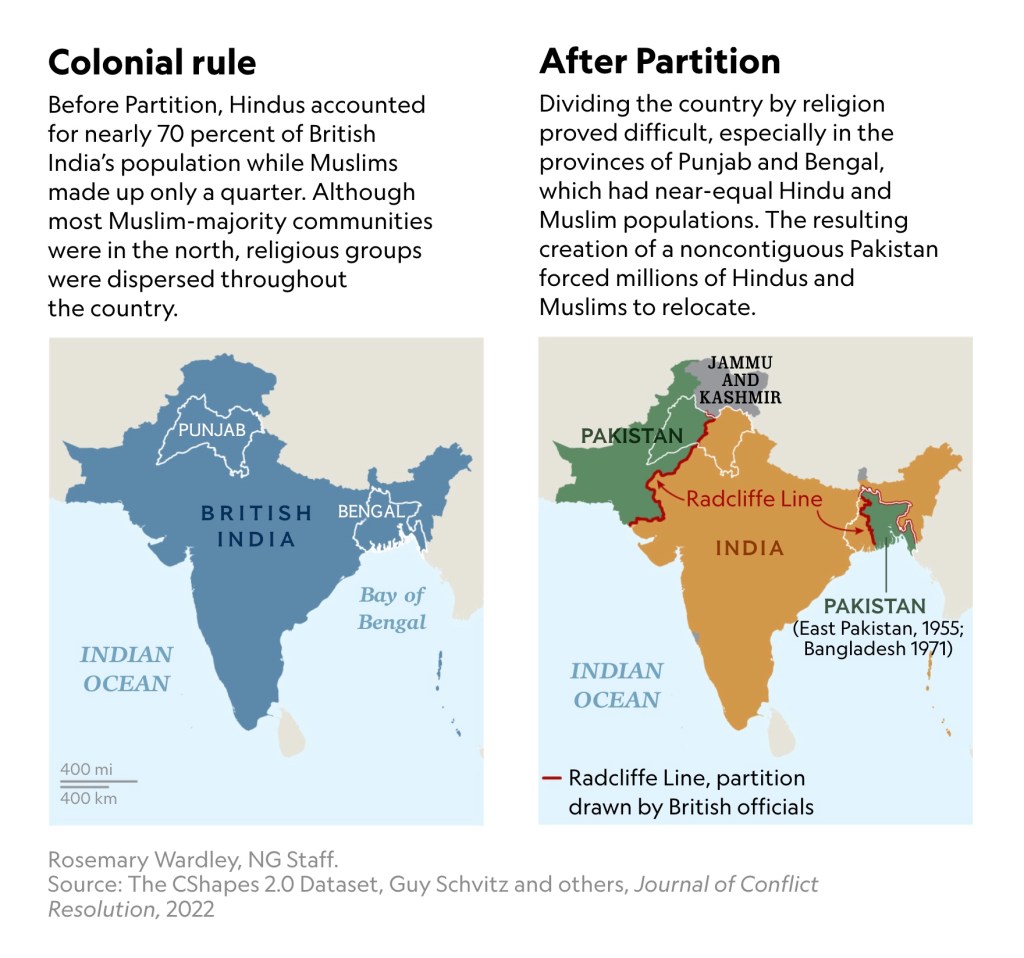
British rule in South Asia has much to answer for. But the partition of British India into India and Pakistan cannot be one of them. Muslim Indians of the time (or at least their leaders like Mohammad Ali Jinnah) wanted it and adamantly so. Of course, the British did pit Hindus and Muslims against each other during their 200 years long “adventure” there. But in the end, it was the Muslims who wanted their own country carved out of British India where Muslims had a greater population than Hindus.
Incidentally, that happened to be on two sides of the Indian Republic today. So after the British left the region, the world ended up with Muslim majority Pakistan containing two wings (East & West) with Hindu majority India in the middle. And that turned out to be an untenable situation, particularly for the East Pakistanis (now Bangladeshis) for reasons that would warrant an entire encyclopedia. So if not for partition, there would be no Bangladesh today.
Why did Muslim Indians want a separate country of their own?
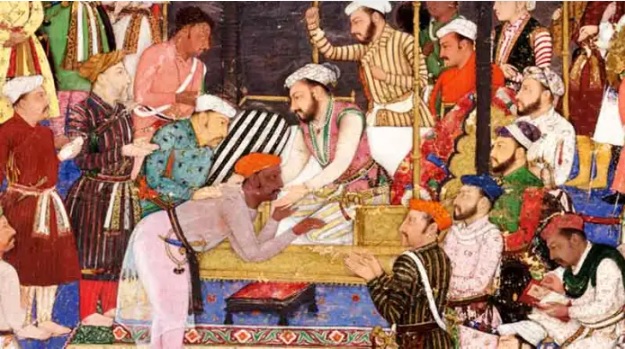
Mughal Kings ruling over native people (Hindus)
Prior to the arrival of the British in the mid 1700s, the huge area was ruled by Muslim Mughal Kings. Under their rule, and under that of prior Muslim invaders from Central Asia, Hindu Indians suffered from being second class citizens as peasants for over 600 years, since Hindu Kings were routinely defeated during conquests and their Kingdoms usurped.
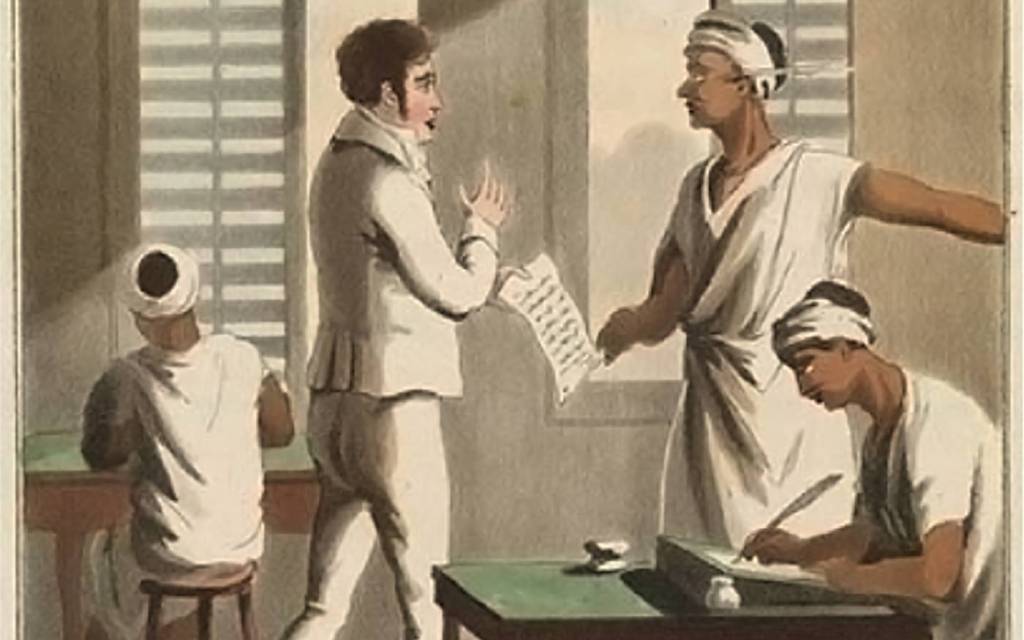
Hindu Indians becoming Babu(s) of the British Raj
It was British rule that many Hindu Indians ironically found as their ladder to use, to climb the social order. Many of them cooperated with the British rulers and willingly took on British education. Indian clerks of the British Raj became known as Babu(s). Muslim Indians, on the other hand refused to cooperate with the British. The result was that after 200 years of British rule, the tides were turned.
As independence of India became a certainty after Mahatma Gandhi piqued Britain’s conscience over decades, and Britain’s finances became dire after World War II, Muslim Indians (mostly peasants by then, particularly in the eastern part of British India) feared being ruled over by an educated and more powerful Hindu majority after the departure of the British. They were joined by a few elite anglophile Muslims in the western part of British India who shared the same concern.
Dismemberment of Pakistan and the forgotten genocide
The dividing up of British India into independent India and independent Pakistan in 1947, and the dismemberment of Pakistan (i.e independence of Bangladesh from being Pakistan’s eastern wing) in 1971, were both incredibly bloody events of history.
While the Hindu-Muslim bloodshed of partition in and around 1947 is better known, many people around the world are still learning about the genocide, ethnic cleansing and rapes of women in 1971 that were conducted by the Pakistani army against Bengalis in the eastern wing who are now Bangladeshis. This was a heavy price for Bengalis to pay, for wanting a free country.
A heavy price indeed! Religious genocide by Muslims on Muslims and Hindus
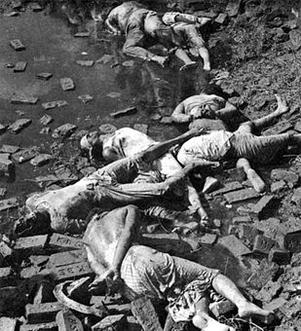
Unofficial figures: 3 million Bengalis were killed and nearly 500,000 Bengali women were systematically raped by the Pakistani army – the goal of the latter being to change the genetic code of future offspring in East Pakistan as much as possible; i.e. to make them less Bengali (read Hindu like) and more Pakistani (read Muslim like).
Religion was not the only factor here. Language was a big factor too as has been discussed later in this article. Bengalis spoke a Sankrit based language (Sanskrit being meshed with the heritage of Hinduism). Hence, Bengali Muslims couldn’t possibly be true Muslims in the eyes of the West Pakistani elite who spoke Urdu, a language developed by the Muslim Mughal Kings and which had Persian heritage.
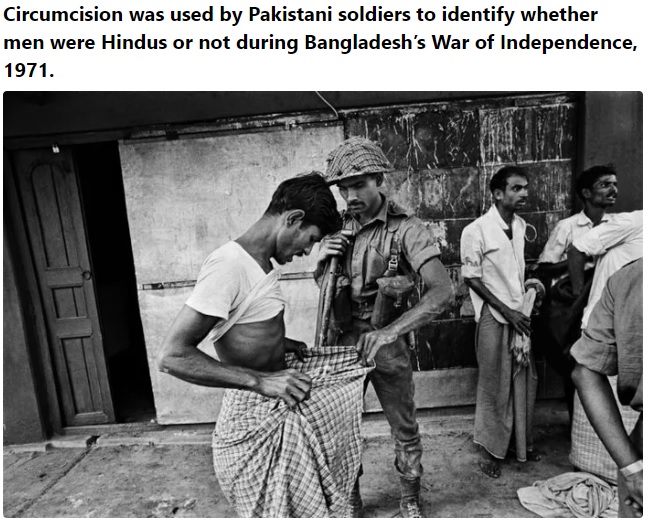
It should be noted that Hindu Bengalis in the eastern half were disproportionately targeted for killing by the Pakistani army. They also formed the majority of those who fled to India during the 9 months period in 1971 (some never returned).
Mukti Bahini and India
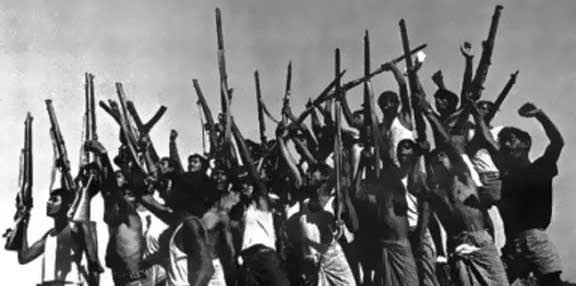
Bangladesh will always remain grateful to India for hosting 1 million refugees (alluded to above) during our War of Independence; but more so for intervening in December that year, joining forces with the Bengali paramilitary force called Mukti Bahini, our Freedom Fighters, that they trained.
Together, they fought, died and defeated the Pakistani army in the eastern half to surrender 9 months after the latter began Operation Searchlight on the midnight of March 25 in Dhaka. Bangladesh came to being on 16 December the same year. Joy Bangla!
Stuff of parody?
What has the Pakistani state been teaching its citizens since 1971 about this part of their history? It is literally as follows: “that Pakistan’s dismemberment was an Indian conspiracy and that Bengalis were traitors who went along with it. Brave Pakistani soldiers tried to stop this from happening. They tried to “protect” Muslim Bengalis from Hindu Indians but the Bengalis ended up killing many of the Pakistani soldiers instead!”. This is beyond the stuff of parody.
The quest for Bangladesh’s independence began with the right to speak and use the Bangla language
To summarize a so called encyclopedia into a few paragraphs, East Pakistan’s Bengali people’s thirst for independence grew in stages starting the year 1952, only 5 years after the same people were instrumental in carving the Pakistani state out of British India.
1952 is when Pakistan’s then government (based entirely in the western wing) attempted to impose the Urdu language on the Bengali people who lived mostly in the eastern wing and who spoke Bangla (also known as Bengali). The intention was to establish a lingua franca other than English among all of Pakistan’s different linguistic and ethnic groups and their administrations.
But the Bengali people were the largest linguistic and ethnic group in the entire Pakistani state and were defined by the rich cultural heritage and history of the Bangla language in the multi-lingual Subcontinent. They thus refused to allow Urdu being imposed on to their lives, Urdu being a language used only by an elite few based in the western wing at that time. Bengalis demanded that Bangla must remain the official language at least in the eastern half of country.
What followed was one of the first clashes between Bengali people and the security forces of the Pakistani state. A few Bengali students at Dhaka University were killed by the police during mass demonstrations. This episode cemented the earliest bout of resentment Bengalis in the east felt towards the elites in the west.

Shahid Minar built to remember four of the students killed and a mother in the middle.
Discrimination, Racism, Hindu phobia and cultural snobbery
Ever since Pakistan’s creation, the western wing enriched itself by acquiring agricultural resources from the eastern one while undertaking negligible development in the latter. East Pakistan was therefore impoverishing further during this period (as if 200 years of impoverishment under the British prior to this, was not enough!).
There was no meaningful political representation from the Bengali people in Pakistani government institutions either. Racism, cultural snobbery and Hindu phobia on the part of West Pakistani elite, and shown towards the much maligned starving (or fish & rice eating), scantily clothed, darker skinned, physically weaker and smaller Bengali peasants in East Pakistan, were some of the factors here.
Two events that said independence must
Two events in 1970 gave the quest for independence its final vigour. Firstly, a severe cyclone in the eastern half which killed half a million people, was met by utter indifference from the authorities in the western wing where lay all power and money.
Secondly, a national Parliamentary election across both wings shortly after the cyclone saw today’s Bangladesh’s Father of the Nation’s i.e. Sheikh Mujibur Rahman’s political party called Awami League win a majority.
Since the result meant that the elites in the western wing would now have to deal with a National Leader and Members of Parliament (MPs) from the eastern one (all Bengalis), the authorities in the western half simply refused to acknowledge the result.
This made Sheikh Mujibur Rahman rally the entire Bengali nation for full independence from the western wing. Meaningful autonomy were discussed and would have sufficed prior to the two events described above. But now, only full independence would do.
It should be noted that Sheikh Mujibur Rahman fought for Bengali rights for decades, and spent repeated periods in Pakistani prison for this. He tried in vain to negotiate with the western elites again and again to address the vast inequality that was growing between the two wings.
Alas, his clarion call for full independence saw him arrested and imprisoned in the western half in March 1971. Immediately after putting Sheikh Mujibur in jail, Yahya Khan, the then dictator and national leader of both wings, ordered the Pakistani army to enter the eastern one on the midnight of the 25th to begin Operation Searchlight. The goal was to kill as many students, teachers, Hindus and other members of the population as it takes, to kill off the quest for independence.
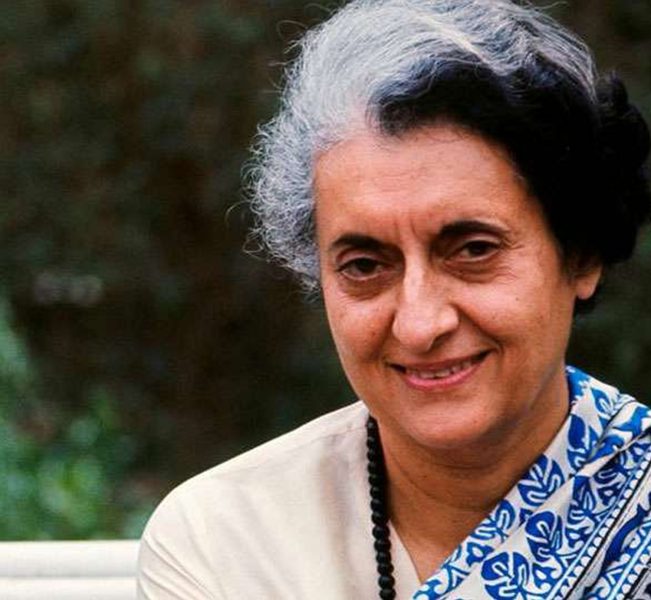
But India’s then Prime Minister Srimoti Indira Gandhi, her national army and the Mukti Bahini mentioned earlier, turned that quest into a reality the same year, after all the bloodshed during the 9 months period, during which villages upon villages were torched by the Pakistani army in what was a scorched earth policy.
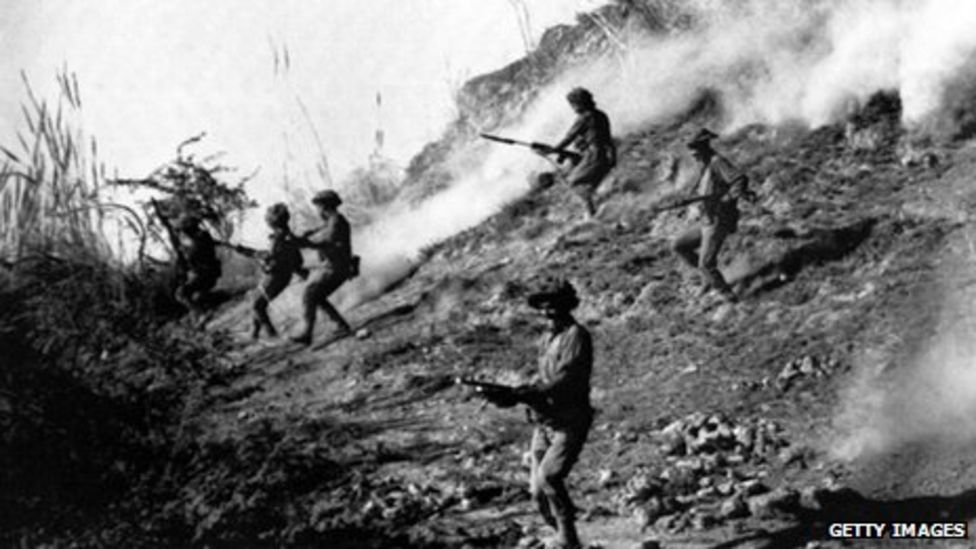
Scorched Earth
An uprising Bangladeshis deny
From the Pakistani side, it is maintained that Operation Searchlight was instigated as a retaliation for Bengalis in East Pakistan rising up against the minority Bihari population in the province. Biharis were Urdu speaking Muslims who emigrated to the province from the Indian state of Bihar after the partition of the Subcontinent. Biharis in East Pakistan were against the dismemberment of Pakistan and showed their allegiance as such.
The treatment of Bengalis from the Pakistani state since partition, as described earlier, created deep seated resentment towards the Biharis who stood for everything the Bengalis were trying to achieve. After anger boiled up beyond control, Bengalis massacred Biharis in the tens of thousands in early March of 1971 in various places of the province. Operation Searchlight began soon after that.
Imminent independence brought about a last act of horror, followed by revenge after the liberation
Once it became clear during the early days of December that year, that the Pakistani army would soon have to surrender to the joint forces of the Indian army and the Mukti Bahini, Pakistan army’s local collaborators in the eastern wing, who were Muslim Bengalis and Biharis that did not want Pakistan’s dismemberment (since that would allegedly damage Islam!), actively sought out the eastern wing’s most talented Bengali people in the field of culture, science and education.
These collaborators’ assistance was instrumental, during the 9 months period, in the slaughter and rapes of Bengalis by the Pakistani soldiers, since the latter, having arrived from the western wing, did not know the eastern one (and allegedly did not know how to swim – a bit difficult to move around in riverine East Pakistan!).
During the final days of our War of Independence, the collaborators mentioned above, who belonged to militia groups called Al-Badr and Al-Shams, killed off our best brains by fetching them from their homes, taking them to a well known marshy place in Dhaka called Rayerbazar, and then shooting at them point blank while the latter were totally unarmed.
The intention was to minimize the possibility that a free Bangladesh might ever be able to stand on her own feet, her head held up high. Independent Bangladesh did indeed lack all the talent and resources she needed to rebuild a war ravaged country and many outsiders doubted her future viability.
It should be noted, on the other hand, that after the surrender of the Pakistani army in Dhaka, reprisals against Biharis in the newly established country began, and more massacres against them were committed. Biharis were subject to the same during the war as well.
No Muslim friends at first
All Middle Eastern countries bar one were against Bangladesh’s creation. West Pakistani administration had all the Arab countries convinced of damage to the Islamic world should Pakistan’s dismemberment take place. Only Israel attempted to extend the hand of friendship to Bangladesh and her cause.
But this was swiftly rebuffed by independent Bangladesh, in support of the Palestinian people and their struggle for their homeland. Bangladesh never established diplomatic relationships with Israel and later moved much closer to the Organization of Islamic Countries (OIC).
Oh that Cold War!

The Cold War dimention to the events of 1971 cannot be ignored either. Since India by then had developed a socialist economy, the country became close to the former Soviet Union. West Pakistani elites on the other hand cosied up to the US for balance, and the then American President Nixon found those elites a very useful bridge to cross, and establish diplomatic ties with Communist China which happened to be a close friend of Pakistan.
The goal of the US here was to chip away at the strength of the world’s two large Communist entities combined, by bringing China closer to the US and away from the Soviet Union.
As a result of being such a useful bridge, West Pakistan found Nixon and his then Secretary of State Henri Kissinger not only condoning what Yahya unleashed in East Pakistan, but also actively supporting it later on. So in return, India used her friendship with the Soviet Union to force the latter to support the quest for Bangladesh at the UN.
Once exasperated Indira Gandhi sent the Indian army to quash the Pakistani one in what is now Bangladesh, the US and the Soviet Union nearly came to, I dare say, nuclear blows with each other in the Bay of Bengal.
Thankfully, the Pakistani army surrendered, and conditions were created for a US aircraft carrier sent to the Bay to support the butchering army, and several Soviet submarines sent to the Bay to support the Indian one, to be sent back to their respective home.
Soviet Union recognized Bangladesh in January 1972 and the United States recognized Bangladesh in April 1972 after the Indian army left the country, having helped liberating it. Nixon went to China in February 1972 and was able to establish full diplomatic relations with the country in 1979. China, on the other hand, did not establish diplomatic relations with Bangladesh until 1975.
Sheikh Mujibur Rahman returns to Bangladesh
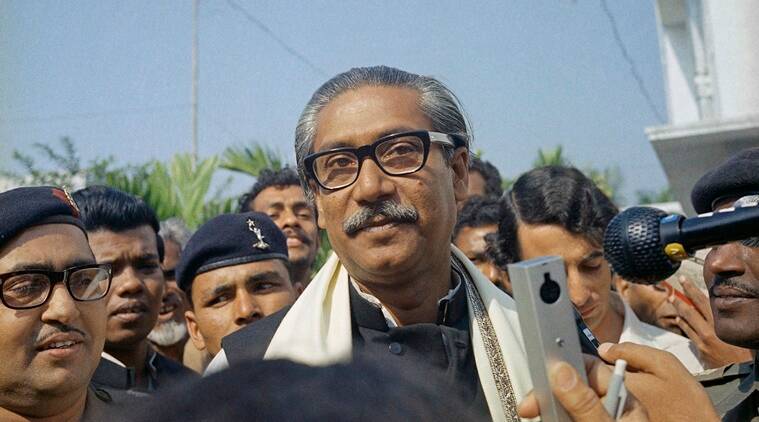
Thanks to Indira Gandhi’s relentless pressure on Pakistan (or what was left of it), Sheikh Mujibur Rahman (affectionately referred to by many as Bangabandhu, or Friend of Bengal) was unharmed in Pakistani prison. After Bangladesh’s birth, he (also known as simply Sheikh Mujib) was released. He returned to Dhaka to become the country’s first National Leader.
Bangladesh’s journey since then can be the subject of a case study in political science, power play, religion, poverty, corruption and development. Once one of the wealthiest parts of the world that attracted traders from all over the world (and incidentally some colonizers), had been reduced to one the poorest, when the journey began on 16th December 1971.
Bangabandhu dealt a bad hand – his gallant efforts only led to tragedy
It is suffice to say that after the terrible start to the journey, the initial couple of decades were very difficult indeed. Poverty, famine, spiralling prices of essential food items (all linked), maladministration, political assassinations, military coups and natural disasters plagued the country for the first few years.
Corruption, crime and nepotism also took root in the country at this early stage, which was also accompanied by terrible lawlessness. It is claimed by many that the first administration of independent Bangladesh, led by Sheikh Mujibur Rahman and his Awami League was an abject failure.
But it would be unfair to put all blame for it squarely on the Father of the Nation. Millions of Bengali refugees had returned from India, thousands of Bengalis from Pakistan. All these people required rehabilitation, food, health, and education for their children. But the country’s infrastructure was devastated.
Moreover, he had to fight off, among other things, a famine between 1973 and 1974 (that some people unjustly blame him for), the prevalence of weapons still floating around after the War of Liberation ended, and revolutionary movements by Mao Zedong inspired hardcore local communist rebels.
Despite the fact that under his visionary leadership, Dr. Kamal Hossain and his team were able to gift the country with one of the most progressive Constitutions in the world, despite the fact that he successfully ended the country’s Zamindari or feudal system, despite the fact that he was swiftly able to establish or reclaim from the former Pakistani administration, vital organs of the state, things started to spiral out of his control.
In order to get a firm grip on the situation, Bangabandhu ended up taking steps that turned the country into a one party, authoritarian, ultra nationalized state with a zero free press. He called this adminitration BAKSAL (Bangladesh Krishak Sramik Awami League) or Bangladesh Worker-Peasant’s People’s League. Most of the newly independent Bangladeshi people including members of the armed forces were eventually fed up by these turns of events. Majority of Bangladeshis who considered Sheikh Mujib almost a demigod figure felt betrayed.
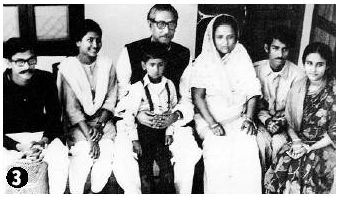
Sheikh Mujib, along with most of his family, was assassinated in Dhaka in the early morning of August 15, 1975 by overzealous officials of the Bangladesh army.
Confessions obtained later revealed that the officials were disgruntled a) by Bangabandhu’s denigration of the army, b) by prolonged uncivilized behaviour of some members of his immediate family, c) prolonged criminal and impunity given behaviour of the Rakshi Bahini, a paramilitary force that Sheikh Mujib created to keep the peace during his time in office, and d) the direction of the country as described above (not everyone desired such an ultra-leftwing and totalitarian disposition).
On the last point, the officers claimed that they felt an earnest and patriotic duty to save the new born country from the abyss. They felt (no endorsement here) that the only way to achieve that goal was by finishing off the Mujib family.
Ziaur Rahman’s emergence and fall
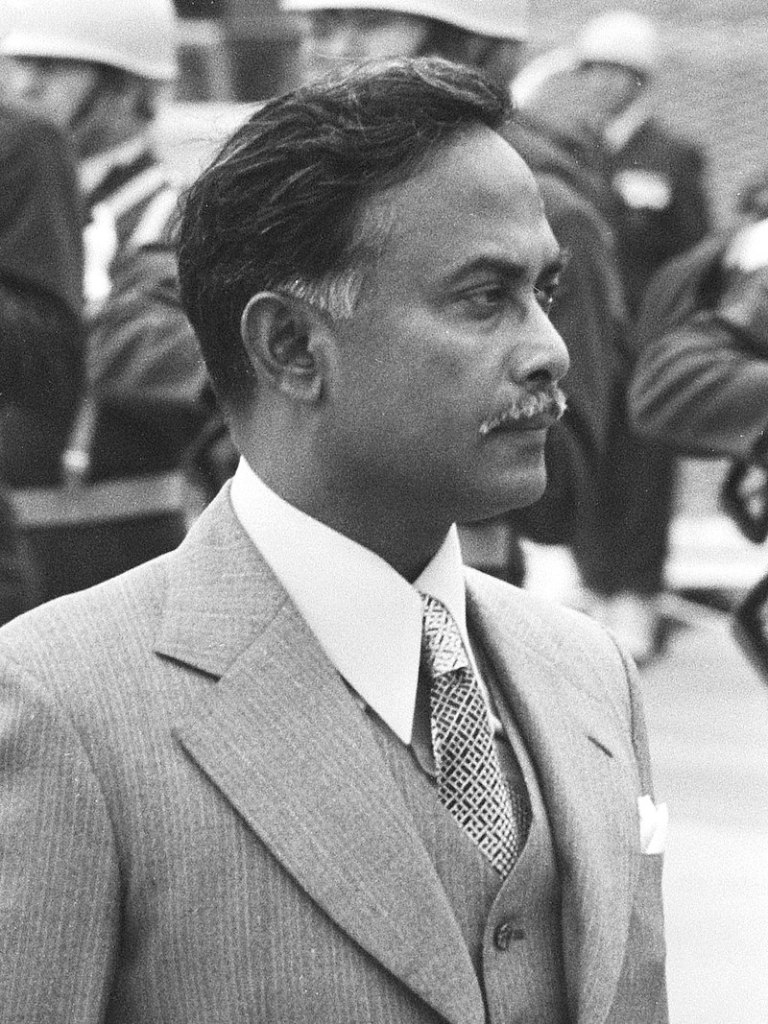
After this terrible, dark event in Bangladesh’s history, there were some further coups and counter coups for nearly two years through which process, General Ziaur Rahman from the army emerged as the country’s next leader in 1977 to count a few years of dictator turned politician styled reign under his belt.
He formed a new political party called the Bangladesh Nationalist Party (BNP) and endevoured to turn Bangladesh away from India (and by extension, the Soviet Union), and get closer to China, the West and the Middle East.
He reinstated multi-party politics (with dubious results explained later), freedom of the press, free speech, free markets and accountability. He initiated mass irrigation and food production programmes, including social programmes to uplift the lives of the people. He soon cast a huge spell of popularity over most of the population.
But the Bangladesh army which he hailed from (he was a senior Freedom Fighter during the War of Liberation having defected from the Pakistan army, and made the first announcement on radio in the early hours of March 26, 1971 declaring on behalf of the Father of the Nation, Bangladesh’s independence) turned out to be his achilles heel.
There were 21 coup attempts from within the army against him which he dealt with holding military tribunals for and executing thousands of army and air force officers (people spotted endless blood and bodies flowing through Bangladesh’s rivers with no apparent explanation). But fate caught up with him and he was assassinated by a colleague of his (along with a team) on May 30, 1981. This was another dark event in Bangladesh’s history.
Bangabandhu’s two daughters, Sheikh Hasina and Sheikh Rehana, were abroad during the assassination of the Mujib family in 1975 and thus survived the ugly incident. During Ziaur Rahman’s Presidency, Sheikh Hasina was allowed to return to Bangladesh and resurrect the Awami League, most of whose members went incognito after the assassination. BNP till today touts this as one example of how President Ziaur Rahman (also known as President Zia) introduced multi-party politics in the country. Another example of this will be elaborated on a little later.
An attempt at democracy after Ziaur Rahman’s death crushed by a bloodless coup
A general election was held in December of the year Zia was murdered, and the BNP (under the new leadership of Justice Abdus Sattar) got the majority (sympathy) vote with Awami League coming second. But the new Presidency of Justice Sattar was abruptly interrupted by a bloodless coup on March 24, 1982 by General Hossain Muhammad Ershad from the army. It should be noted that Sheikh Mujib, Ziaur Rahman and Ershad had only a few degrees of separation among them and more or less knew each other.
Ershad’s ten years of power lust
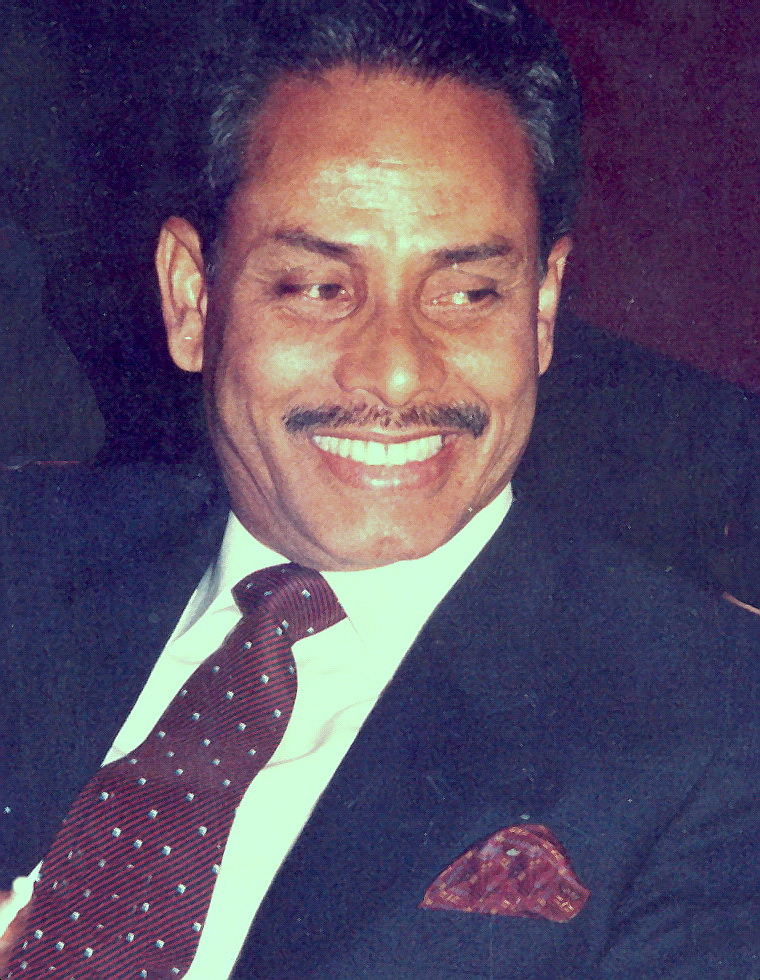
What followed the coup was Ershad’s nearly ten years of rule by dictat. Initially, he suspended the Constitution, democracy, press freedom etc. and exerted firm control over every aspect of the country. There were no pressing emergencies at that time that could have possibly compelled him to oust a recently democratically elected President at the point of a gun. He simply took a leaf out of Ziaur Rahman’s play book, and added in his own lust for absolute power.
Many Bangladeshis lost hope for the country at these developments and those that could, emigrated. But such dictators know how to gain popularity with time. Many Bangladeshis still remember with fondness how rural roads, country highways and train services transformed over a short period of time, at his whim. It was not long ago that Bangladesh was devastated by war and these improvements were very much appreciated. People and goods started moving faster, and so did business.
He used his militiary resources and efficiencies to transform village and city life with show piece roads and other constructions. He carried on privatizing state owned enterprises and won support from the Middle East and the Western world during a time when the West preferred autocratic but market friendly dictators than socialist or communist leaders.
Corruption was rife everywhere (a trend that has only proliferated till today). It was during this time (starting however from Ziaur Rahman’s time) that we noticed the early formation of a nouveau class of mainly Dhaka based elite with new money and power, through often ill-gotten wealth. There was not much industrial output in the country and everything had to be imported. Somehow this sort of trade enabled the aforementioned group of people rise from rags to riches.
The Bangladeshi army was the biggest beneficiary of Ershad’s rule. Not only were its members in government, but also living plush lives in Bangladesh Embassies and High Commissions abroad. The government also became adept at begging for foreign aid, some of it flowing into the wallets of those with power, the rest being used for infrastructure.
But the socially, culturally and politically conscious people of the country never accepted his hegemony. Ziaur Rahman’s widow Khaleda Zia took charge of her late husband’s Bangladesh Nationalist Party (BNP). Sheikh Hasina was already in charge of the Awami League (AL). Both suffered imprisonment under Ershad for daring to attempt to rise up against him. But mobilizing against Ershad continued.
To placate people’s undying demand for democracy, he created a new political party called the Jatiya Party (JP) and attempted to hold multi-party elections more than once starting 1986. These were either partially or fully boycotted by BNP and AL, in order not to give Ershad any legitimacy.
Towards 1990, nearly all political parties in the country other than JP were able to join hands together, mobilize students, cultural activists and the polulation in general to force Ershad to resign in the face of mass uprisings. Once he lost support of senior army officials and the West, he resigned on December 6, 1990.
Democracy at last but a little imperfect
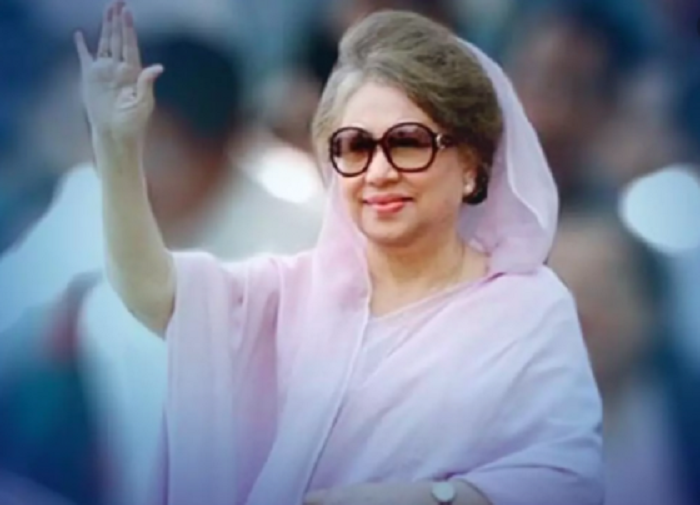
Khaleda Zia
After that, Bangladesh entered the league of democracies where Khaleda Zia became the democratically elected Prime Minister in 1991 after a free and fair election, and switching from a Presidential system to a Prime Ministerial one. The election actually resulted in the Awami League receiving a slightly higher popular vote but the BNP receiving more Parliamentary seats.
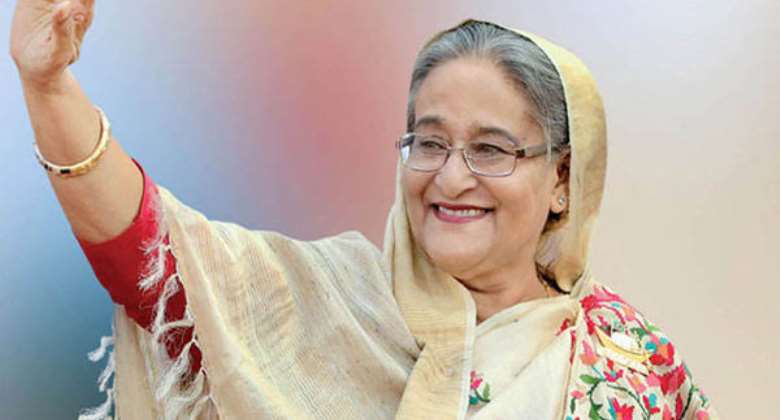
Sheikh Hasina
Sheikh Hasina was never satisfied with this result and made allegations of subtle vote rigging (unsubstantiated by local and international observers). Some actions on the part of BNP while in power angered her to the point where she not only boycotted Parliament, but called endless national strikes known as hartals throughout Khaleda Zia’s term.
During these countrywide hartals, there was no running transportation. This, along with an earlier deadly cyclone in April 1991 that killed nearly 140,000 people in the coastal areas, meant any chances of Bangladesh’s economic uplift were nipped in the bud.
However, by capitalizing on a by-election in a place called Magura, in which a BNP candate won by vote rigging, Sheikh Hasina was able to reverse her fortunes. She became the country’s following democratically elected Prime Minister in 1996, also after a free and fair election.
That election resulted in the Awami League receiving more Parliametary seats but the BNP receiving more of the popular vote, making Khaleda make allegations of subtle vote rigging (also unsubstantiated by local and international observers).
Unsurprisingly, Khaleda was physically present in Parliament (as Leader of the Opposition) only for a handful of days during Hasina’s reign between 1996 and 2001. Hasina, on the other hand, laid the ground work for much of the infrastructural development and social welfare policies that she continued during her later terms in office. More on that later.
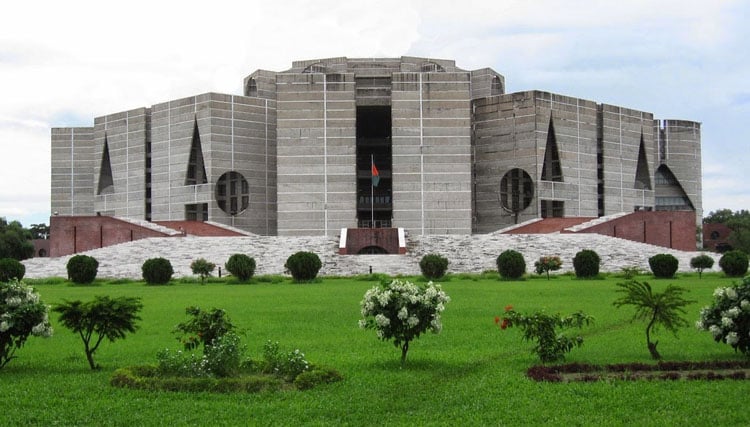
Parliament Building (Sangshad Bhaban)
Ershad and his Jatiya Party ironically never disappeared after his resignation. After spending time in prison for corruption charges, Ershad and his political party became King Makers in Bangladesh’s soon to be the norm of coalition governments. To this day, JP is a trusted ally of the Awami League (though Ershad has recently met his natural death).
Khaleda Zia’s BNP formed a coalition with an Islamist party called Jamaat-e-Islami (described later) to maximize the opportunity to gain Parliamentary seats in the next election in 2001. This tactic along with Hasina’s incumbency factor meant the BNP-Jamaat alliance captured majority of seats in that free and fair election.
This period between 2001-2006 saw disturbing and widespread attacks on the Hindu minority population. The violence mostly occurred in South West Bangladesh which had large Hindu communities. The attacks by BNP men started soon after the election, and were systematic with a motive to destroy the economic resources of the Hindu community, terrorize them into fleeing to India, and grabbing their properties.
This was accompanied by further Islamization of the country that was first begun by Ziaur Rahman. During this period, Islamic terrorism against the state (by a terrorist group called HUJI), and corruption at all levels reached a new high as well (more on corruption during this period described later – in the section describing Hawa Bhaban). And by supporting anti-India elements within Bangladesh in more ways than one, the BNP-JI government helped to create instability in North East India.
It wasn’t until 2009 that Sheikh Hasina was able to return to power. She has stayed in power ever since.
Socialist economy no more
BNP, under Ziaur Rahman, had already introduced free market economics in the country as mentioned earlier. This was expanded on by Ershad. Awami League (AL), under Sheikh Hasina, embraced free market principles in time as well. These developments led Bangladesh to gradually embrace globalization.
Amazing social indicators
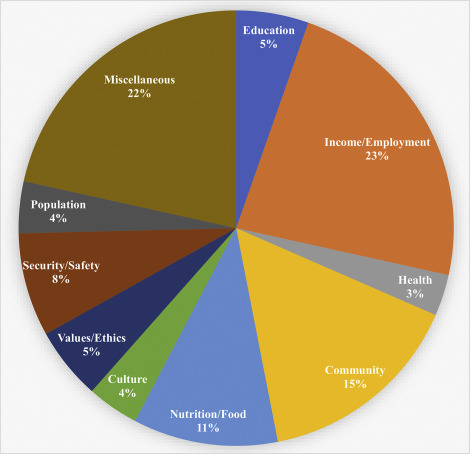
After 51 years of her existence as a free nation, Bangladesh can boast of significant social and economic development which has increased women’s empowerment, general nutrition, health, life expectancy and literacy (of girls and boys alike) to name just a few.
The country’s birth rate has now reduced to near replacement levels while infant mortality rates have come down too. Millions of people have been lifted out of poverty and the country’s middle class out numbers the population of many Western European countries.
There is now far better preparedness for natural disasters like cyclones as well. Annual flooding of the delta around the monsoon season is a phenomenon the country has been adapting to live with, by minimizing its harm and leveraging its benefits for agriculture.
Major flooding once a decade however remains a challenge. 1988 and 1998 will be remembered for devastating ones caused by incessant monsoon rains in neighbouring countries and Bangladesh, that caused all the major rivers of the country to swell up and engulf vast areas of land including cities.
Numerous NGOs, foreign and local, large and small, have since independence, worked in tandem with Bangladeshi governments of all stripes (failed, military and democratic). OXFAM and USAID must get a special mention as international organizations, whereas BRAC and Grameen Bank were home grown but internationally renowned NGOs that protected the most vulnerable when it was most needed.
International aid from many countries during the early days helped not only to stabilize the country at a very difficult time but also to prepare Bangladesh to qualify for loans from international financial institutions.
Today, Bangladesh enjoys a good credit rating with international lenders, since the country has never defaulted on any international foreign currency payments, not even during her worst moments (there is however an update on this further below). It should also be noted that the country has enjoyed an average GDP growth rate of 6 percent over the last two decades.
But alarming inequality

But the lack of a well regulated market economy, lack of rule of law, lack of a uniform education system, and lack of uniform access to healthcare has meant that the wealth gap between the top and bottom end of the economic scale is widening to alarming levels. This needs to be mitigated by strong policies to reverse the realities mentioned above. It may require, among other things, a socialist approach to education and health.
This squire believes that education and health are two of the basic human rights that must be uniform and equally accessible to all, in order to break the cycle of economic and social disparity that everyone find themselves trapped in. A person’s access to education and health treatments should not depend on the size of his or her wallet. Everyone having equal access to these two sectors would create a level playing field for all to rise up, compete and thrive in a globalized market economy.
Moreover, elitism in education and professions should be relegated to the past. The country has gained nothing from such elitism inherited from the British colonial period, other than the proliferation of a class based society. Since education and/or wealth are the only two factors that have determined a person’s respectability over the ages, we need to remove all barriers to attaining such. High standards in all spheres of life could be made universal and we can learn a thing or two here from the Scandinavian countries.
Battle of the Begums

Awami League (AL)

Bangladesh Nationalist Party (BNP)
Though the country’s domestic politics remains rotten, Bangladesh can boast of some free and fair, multi-party Parliamentary elections (as I have alluded to already). Recent elections (one held on January 5, 2014, and the other on December 30, 2018) however have not been free and fair, and the space for democratic politics has almost disappeared, thanks to both major political parties acting in bad faith.
The two Begums (i.e. the ladies leading their parties) have developed a acrimonious relationship with one another which has held the country hostage (this being dubbed as the Battle of the Begums by foreign diplomats in Dhaka).
Sheikh Hasina’s life came under threat in 2004 when she was in opposition, allegedy by members of the BNP who threw granades at her stage where she was giving a speech. Many senior members of the Awami League lost their lives in this grisly attack.
Though Hasina was lucky, it is assumed by many that this attack was aimed at finishing off what was left of the cold blooded killing of the Mujib family in 1975. It should be noted that Hasina has always suspected Khaleda’s late husband Ziaur Rahman’s hand in her father’s assassination.
She, on the other hand, has neutered the BNP (Khaleda and other activists alike by imprisoning them) after the latter held the country hostage twice by election related blockades and arson attacks while the former has been in power (2009 till now). This neutering has had the effect of bringing political stability to the country at the expense of democratic politics.
RAB and extra-judicial killings
But the neutering was conducted in an extra-judicial manner. Security forces severely maimed many a BNP worker, arrested many of them, put false charges on them, and forced many to simply disappear.
These types of activities, on behalf of the government, has gradually changed Awami League’s character under Sheikh Hasina into a brutal, suppressive and overbearing political force that is incongruent with the democratic world. Extra-judicial killings through crossfire by the country’s elite Rapid Action Battalion (RAB) had become the norm.
The government proudly maintains that RAB has successfully reduced terrorism (more on this later) and brought political stability to the country. Hiding behind this truth is that terrorists, drug peddlers and anyone opposing the current government were legitimate targets of RAB.
The Battalion’s methods of bringing BNP to its knees were unethical, illegal and with zero accountability, though that did not stop Bangladeshis appreciating the relative stability brought about by the government’s actions.
Reports of extra-judicial killings were downplayed by Awami League’s spokespeople. Some even defended the killings by explaining that RAB only killed criminals. The Prime Minister has openly refuted claims of forced dissapearences (a popular retort including that the people concerned hid themselves in order to bring disrepute to the government!).
But Bangladesh’s Human Rights organizations has kept ringing the alarm bells. Many a family have come forward with photos of a father, brother or husband (often the only bread winner in the family) not been seen for months on end since being picked up blind folded, by plain clothes officers.
Some have been found dead in remote areas many months later. Those that eventually reappeared were physically and emotionally harmed (or blackmailed) to the point where they refused to divulge any information regarding their ordeal. It was only after the United States imposed visa restrictions on top RAB officers that extra-judicial killings significantly came down and so did enforced disappearances.
It is ironic that RAB was formed during BNP-JI’s term in office between 2001 to 2006. It was used by the then government to combat crime and Islamic terrorism against the state during this period. It was also used to go after many a opposition member belonging to the Awami League. The irony is not lost on the fact that Sheikh Hasina loudly condemned the formation and use of RAB at that time.
The US and UK were instrumental in the formation and training of this Battalion in Bangladesh, though those two countries would have preferred the Battalion kept for use to combat crime and terrorism only!
Hasina’s cancellation of provision for caretaker governments for elections
It should be noted that BNP’s blockades and arson attacks were in protest to Hasina removing the constitutional provision of having a caretaker administration conducting general elections. Both Khaleda and Hasina came to power repeatedly through caretaker administered elections.
But Hasina, this time around, wished to introduce the more widely practiced custom of conducting such elections under the auspices of the elected government of the day, having developed a strong distrust of caretaker governments due to her experience with one between 2006 and 2008. This will be elaborated on later.
Khaleda forced Hasina’s hand
AL changing the constitution to remove the provision of catertaker administrations angered the BNP profoundly, leading to the latter’s devastating countrywide blockades and arson attacks with the assistance of Jamaat’s violent and murderous student wing called Islami Chhatra Shibir. These actions by BNP-JI lasted weeks at a time and caused the death of plenty of innocent civilians (burnt alive), not to mention the severe harm done to property, vehicles and the economy.
Sheikh Hasina took a lenient approach to the first occurrence of the blockades and arson attacks in 2013, but decided to sympathize with the public and become ruthless when the second occurrence came around on the first anniversary of the disputed election of 2014 i.e. in 2015. The authorities went after them as if they were terrorists. This is how the neutering of the BNP came about who found few friends locally and globally due to their murderous and destructive methods.
No free and fair election conducted under an elected government
It is very unfortunate for Bangladesh that of the two elections held while Awami League has been in power this time around, the first one was non-participatory and the second one was rigged. The BNP-JI boycotted the first one and the result of the second one (where BNP-JI did take part) gave the Awami League above 270 Parliamentary seats out of a total of 300.
This was absurd to the highest degree. Despite her best assurances, Sheikh Hasina was unable to demonstrate to the country that a free and fair election was possible under the auspices of an elected government.
What about the next election?
A new Parliamentary election is due on January 2024 and it is anyone’s guess as to how that may turn out under the auspices of the sitting government. The only free and fair elections ever held in Bangladesh were under the auspices of a caretaker administration (bar one around 2007).
The tussle between BNP and AL over elections, where the former simply does not trust the latter to hold a free and fair one, has been given a new twist by the current US President Joe Biden’s administration. It has been announced that anyone found to have acted in ways to prevent a free and fair election in Bangladesh will be barred from US visas. The policy will start with the upcoming election. All previous predictions regarding the outcome of that election have now been thrown out of the window.
Early signs of Sheikh Hasina’s autocratic tendencies
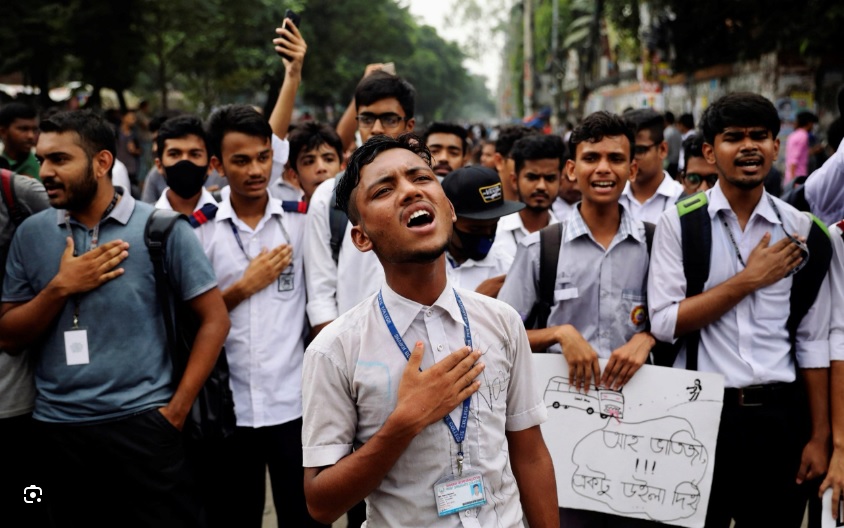
Mass demonstrations of school students broke out starting in Dhaka between 29 July to 8 August 2018, to protest the death of two students on a busy road by a bus that ran them over. These “road safety” protests saw students, supported by a large chunk of the society, take control of road safety for a few days, and demand punitive laws against deliberate road killings. The government showed willingness to listen and asked the students to go home.
But the student wing of Awami League, called Chhatra League, entered the fray later on, joining the police in dispersing the still demonstrating crowd. This began an ugly episode for a few days which were being reported on by many a journalist. One such journalist was a famous photographer and art teacher Professor Shahidul Alam, who gave an interview with Aljazeera English narrating what he saw and recorded.
This infuriated the government, and under the then section 57 of the Information and Communication Technology Act (a precursor to the Digital Security Act described later), he was picked up by the police (caught live on television), and detained and tortured for two days before having to be admitted to hospital.
Once he was presented in Court, he was jailed without bail for several months. His crime was to act seditiously against the state! Only after international outbursts was he granted bail. Journalists with a lesser profile would not have enjoyed such a privilege!
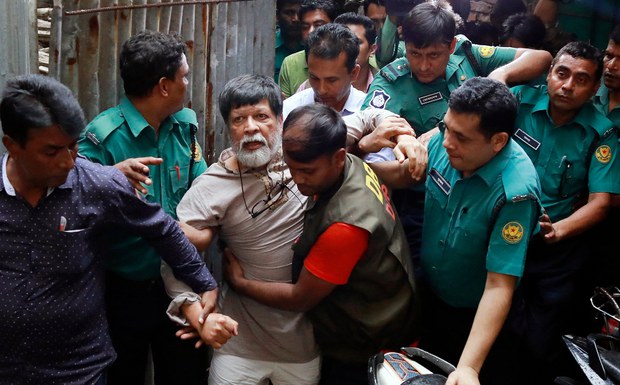
Shahidul Alam
Islamic militancy and the erosion of secularism
Islamic militancy which raised its ugly head during the past two decades has been quashed by the current government (though belatedly and after a lot of damage to innocent lives, both local and foreign). But under successive governments since independence, including this one, Bangladesh’s secular ethos (championed by the War of Liberation and its aftermath) has been gradually diminishing.
Remember the militia groups Al-Badr and Al-Shams? They fled the country after independence, only to have their members being courted back into the country by Ziaur Rahman mentioned earlier. These people opened the Bangladesh branch of a South Asia based political party called Jamaat-e-Islami (JI) which has been mentioned already.
This political party was originally created in the Indian Subcontinent by Abul A’la Maududi who believed in political Islam. This heralded the start of religion based politics in Bangladesh. There was a constitutional bar for such until then.
But why did Ziaur Rahman do this? It was the second effort on his part to introduce multi-party politics in the country (the first being permitting Sheikh Hasina to return to Bangladesh to resurrect AL as mentioned earlier). But why? The reason was two fold. Firstly, it was to solidify his power base. Introducing religion into politics and public life appealed to a large chunk of pious Muslims (despite the composition of the Jamaat).
He thus secured the support of a large portion of the country’s population. Secondly, he successfully pitted Jamaat and Awami League against each other. Both had reasons to despise one another. Zia knew well that JI and AL would never band together to rise against him.
As if Zia allowing Jamaat’s politics in the country was not enough to change Bangladesh’s secular character, General Ershad mentioned earlier played further roughshod with the Constitution and introduced Islam as the State Religion in 1987 (whereas previously there was none).
Sixteen years after the country’s independence, non-Muslims were thus relegated to second class citizens, and “faith traders” (who earned a living by preaching, teaching and leading prayers at Mosques and homes) got a new lease of life to enter the public and private spheres of citizens through their “work” which often included politics.
BNP’s love fest with Jamaat
When the BNP returned to power in 2001, they did so with a coalition agreement with Jamaat as has been alluded to already. We saw the Bangladeshi flag being hoisted on the official vehicles belonging to Jamaat ministers for the first time. This did not go down well with the country’s surviving Freedom Fighters, aghast at the war criminals, who acted actively against the country’s independence, being accorded such honour.
War criminals’ tribunal and Shahbag Movement
Anger boiled up in the country demanding the trials of these war criminals. Sheikh Hasina, after returning to power in 2009, answered to this call and formed a special tribunal to have the main leaders of Jamaat prosecuted.
During the trial process, a movement called the Shahbag Movement, comprising initially of students and online secular activists (bloggers), but later of people from all walks of life, acted to keep the pressure on for the trial. In time, several leaders of Jamaat and one from the BNP were convicted of war crimes in 1971 and given the death penalty.
Jamaat’s UK and North American connections
Jamaat-e-Islami’s UK based affiliate happened to be the Muslim Council of Britain (MCB), some members of whom once belonged to the Al-Badr and Al-Shams militias. MCB went on a community wide blitz poisoning the mind of young British Muslims (mostly of Bangladeshi and Pakistani descent) that Sheikh Hasina was killing Muslim scholars in Bangladesh and thus killing Islam.
Similar brainwashing was noticed by affiliate organizations in North America. Together, they were able to convince major human rights organizations like the Human Rights Watch (HRW) and Amnesty International to exert pressure on the Bangladesh government to cancel the tribunal, not least by highlighting some initial inadequacies of the trial process.
They even went as far as hiring a British Barrister to defend Jamaat’s leaders in Bangladesh. But Toby Cadman had no license to practice law in Bangladesh and was denied entry by the authorities.
The Bangladeshi diaspora (not the young British Muslims mentioned above but a different group of more recent arrivals to foreign lands as university foreign students or professionals), shocked by these developments, galvanized both online and offline to counter the propaganda of the supposed innocence of the war criminals, something maintained by the likes of the MCB.
The diaspora (including yours truly) gave spirited online and offline support to the Shahbag Movement and the government back home. It should not take a huge leap of the imagination to state that some of the young brainwashed British Muslims mentioned earlier ended up in the Islamic State later on.
Awami League’s love fest with Hefazat-e-Islam
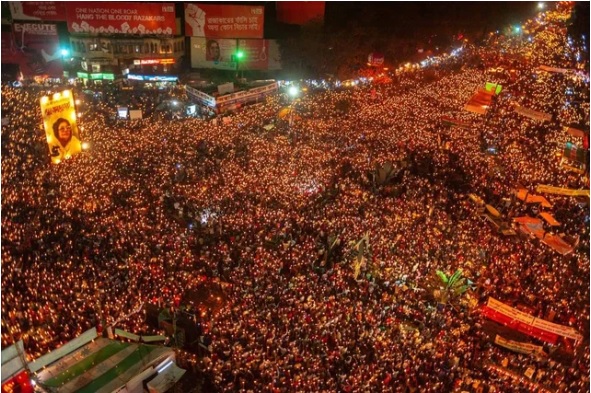
While the essence of Bangladesh’s independence and secularism was on full display through the Shahbag Movement (with free mixing of men and women till late night engaging in expressions of passion through singing, chanting patriotic slogans, drumming, drawing, painting, reading, reciting, and giving fiery speeches at Dhaka’s Shahbag Square), a non-political ultra-religious group (representing endless Qawmi Madrasas in the country) called Hefazat-e-Islam, concerned by what they saw as Islam being under threat by the secular goings on, marched into the capital in droves from Chattogram (Bangladesh’s second largest city), where they were based.
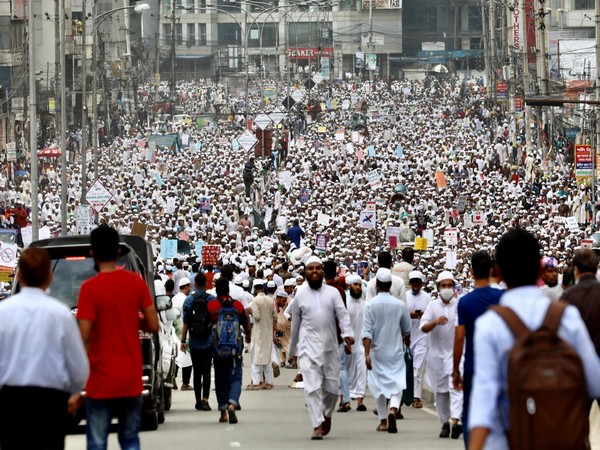
Hefazat marches into Dhaka from Chattogram
This unnerved the sitting government to the point where Sheikh Hasina compromised with Hefazat by a) not introducing a law meant for bringing women’s status up to that of men in all spheres of life, b) introducing laws against hurting people’s “religious sentiments” and c) forming a non-political alliance with them, nurturing them, protecting them and not allowing them to be co-opted by the BNP which already had Jamaat (or whatever was left of it) in the bag.
Qawmi madrasas are completely independently run Islamic schools financed by charity. They teach poor and orphan children, mostly boys, how to recite and memorize the Quran in residential settings. They follow the Deobandi scholastic tradition that has its roots in today’s India. Students who come out of these institutions are good for engaging in the faith trade (described earlier) and not much else.
Yet, Hasina acquiesced to Hefazat’s demand to have “degrees” obtained at the Qawmi madrasas be given equal status to degrees from general education! The result was further erosion of secularism in Bangladesh’s politics and society. We witnessed school textbooks starting to omit contributions of Bengali Hindu literary people and add in more Islamic content (also a demand of Hefazat).
Hefazat-e-Islam at a later stage crumbled due to a) natural death of its main leader and b) some hypocritically immoral behaviour of some of the other leaders. Even though they are less of a concern now for the country’s progressives, secularists, atheists, cultural academics, artists, spiritual folk performers, religious minorities and LGBTQIA+ people (a chunk of all being in exile after serial attacks against them by Islamic militants around 2015), Awami League’s earlier dalliance with Hefazat will have left some lasting damage.
Murders of all walks of minorities
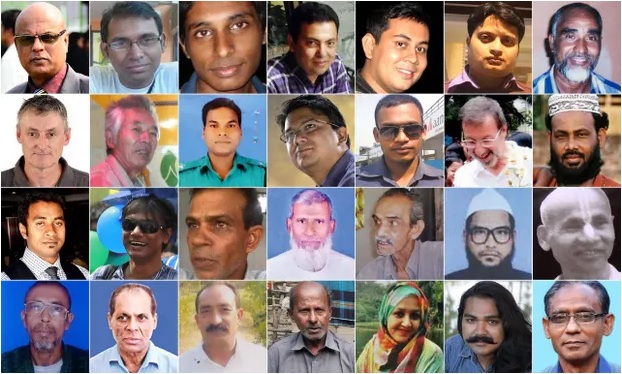
We will never forget you
The period around 2015 was of immense fear for the various social groups mentioned above. We lost many well known and not so well known members of those social groups through machete attacks by Islamic terrorists. One of the prominent victims was a scientist and atheist author called Avijit Roy.
A prominent gay rights activist called Xulhaz Mannan and a gay cultural activist called Rabbi Tonnoy were slaughtered together. Several secular and atheist bloggers lost their lives and we lost leaders from religious minorities and maestros in the field of spiritual folk music. Names of some of the bloggers we lost include Washiqur Rahman, Ananta Bijoy Das, Niloy Chatterjee, Nazimuddin Samad etc.
Denial and Delay
The government initially seemed sanguine about those murders, choosing to either dismiss them as isolated incidents or the sinister work of the main opposition parties. The rest of us were fully aware of the stronghold that many Islamic militants, bouyed by the Islamic State, were enjoying in the country.
Our pleas were ignored until the fatal serial killing of foreigners (including several Japanese engineers working for Dhaka Metro Rail project) in an upscale cafe in Dhaka called Holey Artisan Bakery. It was only then the government swung into full action and eliminated many a terrorist through sustained gun fights and crossfire between RAB and those terrorists. On the sidelines, the Shahbag Movement fizzled out after the war criminal trial process ended.
Sheikh Hasina’s betrayal of Secularism
Sheikh Hasina’s love fest with Hefazat was not the only example of her failure to uphold Bangladesh’s secular character. Soon after she returned to power in 2009, she used her Parliamentary majority to restore most aspects of Bangladesh’s Constitution, after Zia and Ershad played roughshod with it during their time. While it was probably impossible to bring back a constitutional ban on religion based politics in the country (too late!), she could have removed the State Religion (Islam).
But out of fear of losing support of the majority Muslim population, (no Islamic political party would ever openly support her anyway), she kept the State Religion intact, against the counsel of many senior Awami League members, and despite her promises during Ershad’s time that she would get rid of it if she came to power! Thus, while Secularism was brought back as one of the four pillars of the Constitution, it was accompanied by a State Religion – a total contradiction.
How can a secular country have a State Religion? More to the point, what would be the answer to the question of what is Bangladesh? A secular country? Or an Islamic one? The country’s secularists, atheists and religious minorities could do well by being unforgiving here. There may not be another opportunity to have the State Religion removed from Constitution any time in the distant future.
It has been a long time since the Prime Minister has last mentioned Secularism in her speeches. But that should come as no surprise. She has since been building thousands of “Model Mosques” in the country!
Our national shame
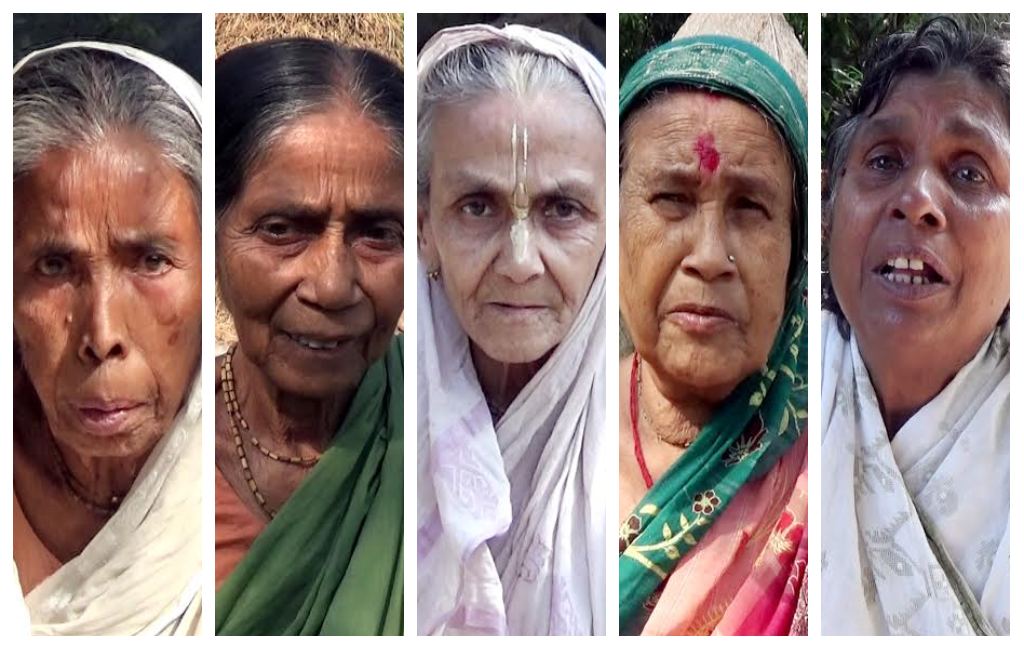
Going back to our War of Independence where many of our mothers and sisters were raped by organized groups of Pakistani soldiers, the corresponding Bengali husbands, fathers and sons failed those women by a much higher degree. Women who survived the rape camps and attempted to return to their families found themselves unwanted by their family members. They were asked to leave for having brought shame to the family. Following this, many of those women committed suicide or started living marginalized lives away from family and society.
Though after independence, the Father of the Nation accepted the surviving victims as his own daughters in spirit, asked them to provide his name in any official document where a father’s name was required, and bestowed upon them the respected title “Birangona” or Brave Women, we must all come to terms with the fact that the shame was not unto them, but unto their men and on the country. We can be grateful to the Shahbag Movement for specially honouring many of the surviving Birangonas in a special ceremony.
Political stability pays dividends
The current government (aided by the political stability obtained by neutering the BNP as described earlier) has undertaken massive infrastructure development projects which are starting to pay off. China, Japan, South Korea, India, Asian Development Bank (ADB) and the World Bank (WB) are the main partners for these projects which in turn are attracting Foreign Direct Investment (FDI) from various parts of the world.
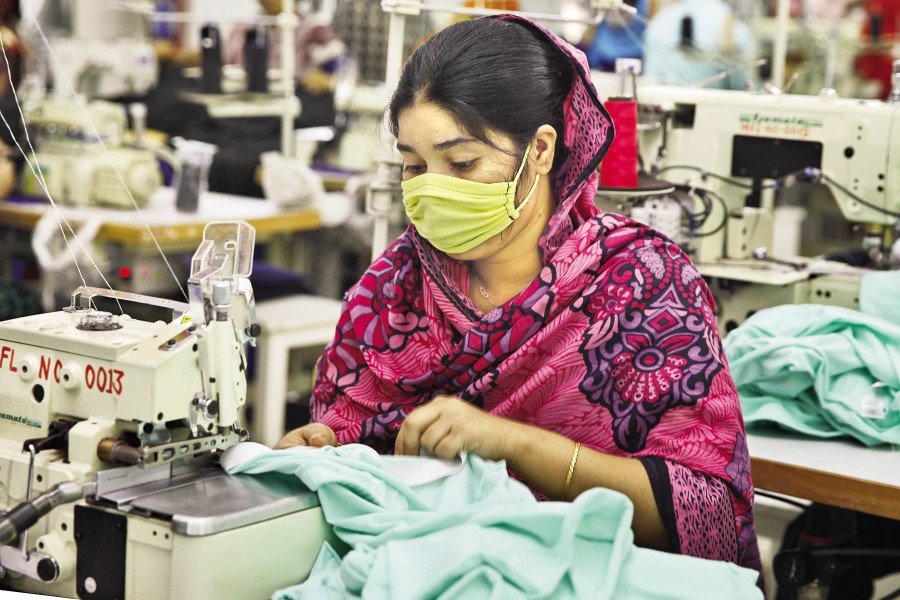
The well known Ready Made Garment (RMG) industry (which has given vast numbers of women a lifeline, with better fed and educated children, and gone through life saving and environmental reforms after a major industrial accident at Rana Plaza), and foreign remittance sent back to the country by the Bangladeshi migrant labour force in the Middle East and Southeast Asia (poor working conditions nothwithstanding) have been changing the face of the country for a long time now.
Added to these in the present day are pharmaceuticals, ship building and the IT sector (comprising of both foreign outsourced work and local start up companies catering to the needs of the local population). Bangladesh went through a green revolution in agriculture quite a while ago where the country’s farmers were able to treble their annual output compared to before, and to diversify their crop base.
It is almost a matter of relief that despite the rotten domestic politics, corruption at all levels and environmental challenges, the country is poised to become a middle income country in a few years’ time. The Covid pandemic was taken seriously with the usual lockdowns and effective collection and distribution of vaccinations throughout the country (thank you USA and India for the vaccines). Bangladesh was spared the worst of the pandemic compared to other places.
But shameful governance
However, democratic governance, a corruption free and accountable administration, basic human rights for all (other than just food, clothes and shelter), security of life guaranteed by the state, freedom of speech for individuals and the media (currently severely curtailed), and most importantly proper rule of law applied equally to all citizens regardless of economic and political status – remain aspirations.
The judiciary remains at the behest of the executive, all state apparatuses get heavily politicized by whichever political party is in power, and the current government’s endeavour to digitize all government services, while noble, has been half baked till now.
Digital Security Act

Remember how Awami League’s character under Sheikh Hasina gradually changed to an overbearing political force as described earlier? Another manifestation of that was the enactment of the Digital Security Act of 2018.
Spinned as an appropriate apparatus to combat online misinformation, character assassination through deliberate false information, jeopardising state and public security through false information etc., the law was actually written in a way (as most members of civil society and journalists had warned) that it has started being used to prosecute people in unethical ways.
Many a journalist and social media commentators, young and old, found themselves picked up by plain clothes men in the middle of the night and produced to Court after some time (often having survived severe physical and mental torture). They were then slapped with charges and jailed without bail to face trial sometime in the future.
Their crimes? They wrote something that either a) was critical of a government action or policy or b) unearthed instances of corruption by a government body or c) hurt people’s religious sentiments in a general or specific manner or d) defamed the Father of the Nation, or Sheikh Hasina herself, the War of Liberation, or anyone under the impression of being somewhat important!
Any one was free to file charges with the police under the Digital Security Act against anyone, even if the former was not directly harmed by the latter. The police were themselves allowed to bring charges against anyone at their whim. Arrests were done immediately without any investigations being conducted into allegations (which most of the time were found later to be baseless).
The effect of this law has been nothing short of catastrophic. The state has essentially muzzled everyone with this law. Nobody can attempt to hold the government, administration, local politicians and security forces accountable. Secularists and athiests cannot express their views critical of religion, and Bangladeshis today are suffocated beyond recognition.
International pressure against this draconian law is finally building up, but the government is tone deaf to all the protests and concerns from the Bangladeshi people.
Sycophancy and yellow journalism
Under this government’s iron rule, a new class of media organisations and journalists has emerged in the country to engage in sycophancy and yellow journalism, instead of asking tough questions.
These media organizations also engage in fictitious news reporting when it comes to international events. All broadcasts and writings are aimed at supporting an evil West versus victim South (read Muslims) narrative that has permeated through this part of the world for decades. Both Awami League and the BNP-JI alliance have found exploiting this narrative useful to prop up their own base.
Amazing development but outrageous malfeasance

Flyover galore
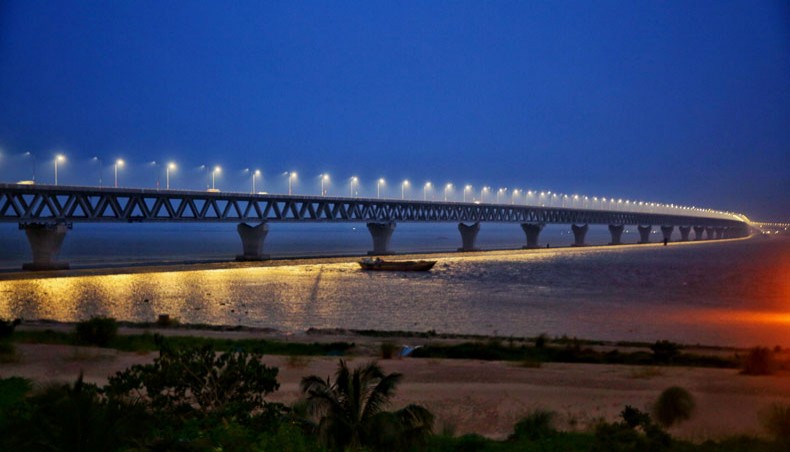
Padma Bridge
But the social and economic indicators keep everyone looking ahead to better days. It is true that the people at the middle and lower end of the economy feel terribly squeezed by the effects of the pandemic and the Russia-Ukraine war, due to uncomfortable price rises of all essentials including food, fuel and electricity. But new national highways, railroads, airport terminals, sea ports, combined with Dhaka Metro Rail, Bangabandhu tunnel under the Karnaphuli river in Chattogram, and large bridges i.e. engineering marvels over Bangladesh’s mighty rivers (Jamuna, Padma and soon Meghna) promise a better future.
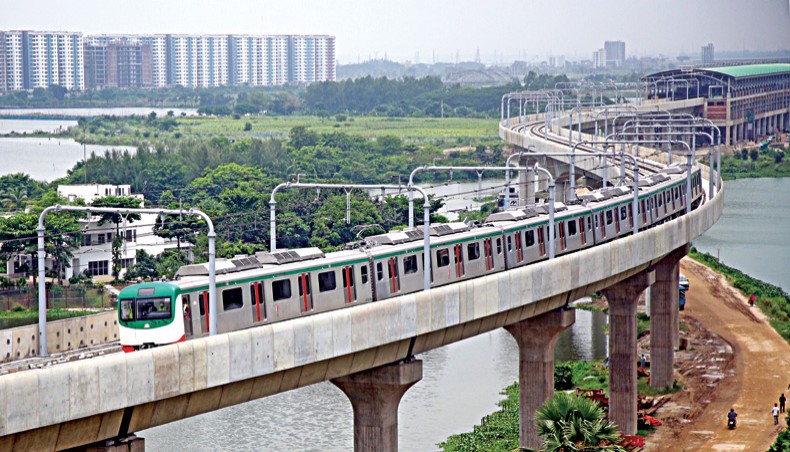
Dedicated Export Processing Zones (EPZs) throughout the country, given to several countries as well as local investors, hold promise to create scores of employment and boost the economy further.
But the efforts of the Awami League to take Bangladesh to her dream place of development and prosperity has been dangerously undercut by the ever increasing instances of money laundering abroad and default bank loans, much of which can be traced to either bureaucrats or business people with political connections to the government.
Bangladesh today is a one-party state with crony capitalism and endemic corruption. It is such a pity that visible improvements in infrastructure and many people’s standards of living, which Sheikh Hasina can rightly claim credit for, cannot be appreciated alone.
This is despite the fact that the country’s GDP per capita figure has now reached an approximate record of $2700. This is despite the fact that the total size of the couuntry’s GDP is $460.8 billion (2022 figures), making Bangladesh the 35th largest economy in the world. This is despite the fact that the country’s foreign currency reserve passed the $40 billion mark prior to the pandemic and the Russia-Ukraine war.
This is despite the fact that nearly every upazila (a sub administrative area) in the country now has a Community Clinic for basic healthcare, and many Digital Centers have been set up across the country to provide government and financial services in a digital way.
This is despite the fact that some of the most marginalized people of the country have received dedicated residential abodes. This is despite the fact that electricity has now reached every household in the country (interruption of service notwithstanding).
Foreign currency reserves under pressure

The pandemic and the Russia-Ukraine war has belatedly unmasked gross mismanagement and corruption in the country’s finances by the current government. At the time of writing this article, the foreign currency reserve has come down by more than $10 billion from the previous record, and Moody’s, along with S&P, has downgraded the country’s credit rating.
There are arrears in payment of coal imports which has meant no further supply of the commodity, resulting in shortfall in electricity production, which in turn has caused loss of industrial production and jobs. Those jobs include those of freelancers who find themselves with interrupted supply of electricity and access to the internet.
More recent falls in international prices of oil and gas have not eased prices of essential goods in the country’s markets, indicating the presence of a syndicate of business people trying to cash in on unfortunate circumstances. The authorities are loathe to regulate them indicating further that many of them enjoy links to the government.
The value of the Bangladeshi Taka has fallen by 30% recently against the US Dollar, leading to inflation of imported commodities. This fall is attributed to by many a) on bad exchange rate policies and b) on the excess pressure on the Dollar caused by money laundering mentioned earlier. It is also presumed that this money has ended up in many countries, particularly in Canada, where immediate families of the bureaucrats and well connected are living plush lives. Other places include Dubai, Malaysia, Singapore, UK, Germany, Portugal, Switzerland and the US.
Recently, International Air Transport Association (IATA) has issued a warning to the country that it must pay up foreign airlines’ dues or suffer from reduction of international flights. But many banks in the country suffer from low liquidity due to the occurrence of defaults on major loans taken out by the rich and powerful as mentioned earlier.
It is presumed by the opposition that many of the country’s infrastructural projects have been made subject to excess budgets and time frame, to financially benefit (illegally of course) many of the people associated with those projects. No journalist dares to try to uncover the true story here for fear of his or her life (and that of family members), and there is no effective opposition in Parliament to ask the questions.
The pandemic and Russia-Ukraine war alone cannot be blamed for the current pressure on the foreign currency reserves. Money laundering abroad and excess project budgets have all had a role to play.
People’s purchasing power is declining again, and the intangible called hope is fast disappearing among a particular section of the society – the lower middle class families. Lack of calorie intake has become an issue for them once again, who do not benefit from government food handouts given to the people at the low end of the economic scale. Food, rent, clothing, schooling, transport costs, medical costs etc. have all skyrocketed, but not their income.
Energy independence
Going forwards, sound macro economic management must be coupled with the quest for energy independence. The country’s natural gas uplifted and used so far has served the country well. But exploration for further gas fields has come to a standstill in recent years.
New found Bhola gas and future findings in the Bay of Bengal must be leveraged to prevent the country from future crises. Solar and other forms of renewable energy sources should become bigger generators of electricity in the future. It is yet to be seen how much the Rooppur nuclear power plant, once operational, will come to our aid.
Unanswered questions – BNP
It is unclear if the next election will make way for a different government and more to the point, if that government will be capable of offering Bangladeshis something different. If BNP returns to power with an alliance with Jamaat (as in the past) and engages first and foremost in political point scoring against the Awami League, then Bangladesh will be the biggest loser.
Moreover, people have not forgotten their abysmal record in government between 2001 and 2006. During this time, Bangladesh obtained the embarrassing distinction of being the most corrupt country in the world, several years in a row. We are now in 147th place out of a total of 180 countries listed according to 2022 data.
Also during this time, Khaleda Zia’s eldest son Tarique Rahman ran a parallel administration called Hawa Bhaban funded by commissions from businesses, all of which required his blessings (he soon came to be known as Mr. Ten Percent). He ran this through fear and expected patronage. It is also alleged that the 2004 attack to kill Sheikh Hasina (narrowly missed) was plotted in Hawa Bhaban. Has Tarique ever apologized to the nation for all this?
During the two years long military backed caretaker government between 2006 and 2008 (which came into being to stop the bloodshed between Awami League and BNP-JI alliance, with the former protesting against a) the terrible misrule of the latter between 2001-2006, and b) preparations for a new election in a manner that BNP-JI were sure to conduct foul play in), he was arrested, beaten by the police who nearly broke his leg, and he flew to the United Kindom for treatment. While his application for political asylum in the UK was pending, he was slapped in Bangladesh with corruption charges.
It should be noted that during the neutering of the BNP by AL that started in 2015, many BNP activists (some of them maimed) followed Tarique’s lead and arrived in the UK to apply for political asylum. Some even went as far as pretending to be gay and/or atheist to assist in their case for asylum, since the UK has had a liberal asylum policy for such people from countries like Bangladesh.
Does the BNP expect the countrymen to simply forget the burning, killing and destruction that they subjected the latter to, with the help of Jamaat’s student wing – not once but twice? Has BNP ever apologized to the nation for this?
Today, Tarique Rahman (son of late Ziaur Rahman) is the acting chairman of the BNP, directing its return to power while enjoying a plush life in the UK. His mother is imprisoned as mentioned earlier for corruption charges as well. This is hardly a noble look for the BNP, and their alliance with Jamaat simply makes them toxic.
BNP has recently come up with some new ideas for governing the country in the future which merit attention. But they have not come up with new leadership, nor a clearer answer regarding their alliance with Jamaat. It should be noted that there is no clear sign of new leadership from within the Awami League either.
Hasina’s vendetta
Political point scoring may not be the forte of the BNP-JI alliance alone. Sheikh Hasina since coming to power in 2009 has shown her own streak of vendetta. During the catertaker administration of 2006-2008, Nobel laureate Professor Yunus of the Grameen Bank was touted momentarily to become head of government. This was to be accompanied by permanently banishing the two Begums from politics, if not from Bangladesh altogether – a formula known as Minus Two.
This formula almost partially succeeded. Both Khaleda and Hasina were put under house arrest by the caretaker administration to face charges of corruption later. When Hasina was eventually allowed to go to the US for treatment, she was barred from returning to the country (airlines flying to Bangladesh were not allowed to let her board).
After outcry from Awami League supporters at home and abroad, she was able to return later and to be free from house arrest. Towards the end of the caretaker administration, Khaleda was freed from house arrest as well.
At this point, both the Begums were free to contest the caretaker administration run Parliamentary election of 2009. The overwhelming support of AL and BNP as political parties (along with the adulation for the two respective Begums) never dwindled despite any cooked up formulas.
When Hasina won the election by a landslide against Khaleda, she cleared herself of all corruption charges against her, but kept those brought against Khaleda Zia intact. When it came time to neuter the BNP later on, it was those very charges against Khaleda that Hasina used to imprison her opponent.
Though the Minus Two formula failed, Hasina was unforgiving towards Professor Yunus. The idea of banishing the two Begums might have been the brainchild of the military and not of Yunus per se. But Hasina was furious at the Nobel laureate nevertheless.
For the record, Professor Yunus initially repeatedly refused the role in government. But he eventually agreed, only to backtrack after a very short time. This backtracking is attributed to a lot of counsel from a lot of well wishers, who feared for his reputation once he entered politics.
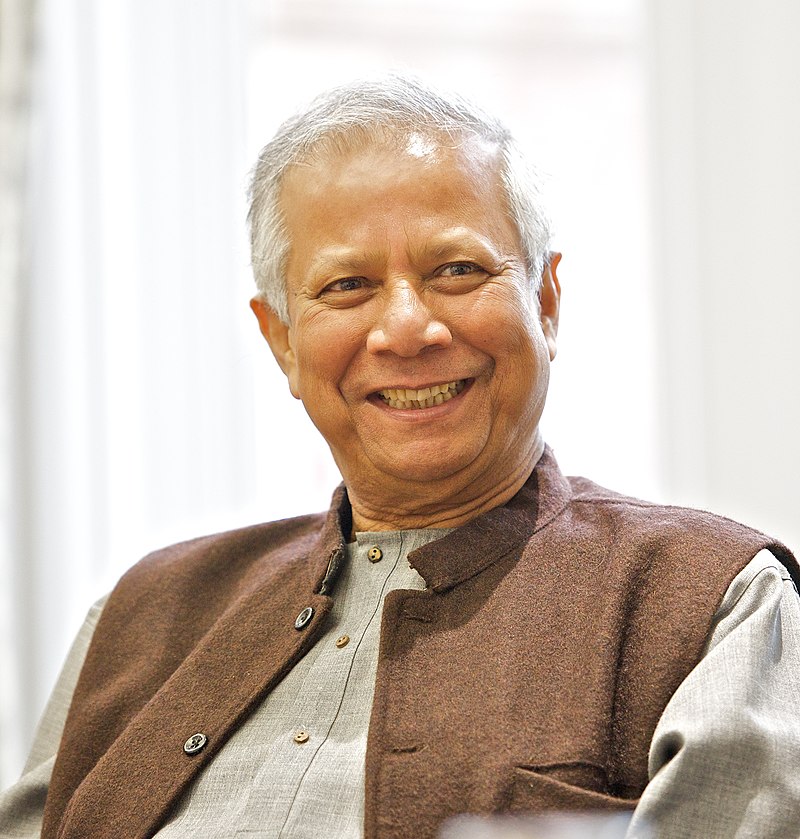
But that made no difference to a vindictive Sheikh Hasina. Through legal maneuvers and rumour mongering, she not only forced Yunus to resign from the Grameen Bank, but also engaged in assassinating his character beyond recognition. This harassment, that had strained Hasina’s relationship with the Obama administration and Bangladesh’s civil society, continues till today. Dr. Yunus remains a prominent member of the country’s largely silenced civil society, and a close friend of the Clinton family in the USA.
In 2017, she forced Chief Justice of Bangladesh’s Supreme Court Surendra Kumar Sinha to leave the country by applying all kinds of preasure on him through various state apparatuses. His crime was to issue a landmark verdict on judicial oversight by Parliament that went against her government.
The trial of Bangabandhu’s murderers
The above two acts by Hasina went far and beyond her expected inclination to have the murderers of Bangabandhu face trial. This trial that began in 1996 and culminated in the death penalty being given to many of the killers, was however largely welcomed. Those that have been spared the noose are those that were fortunately already dead, and those that have been found to be living under protection in the US and Canada, something that continues till today.
How to tackle corruption?

While tough laws against financial irregularities in all spheres of life are prerequisites, they are almost as good as a doormat without implementation. The Anti-Corruption Commission (ACC) in the country lacks teeth to go after big sharks, especially if the latter are in government or are connected to it, which in most of the case, happens to be true.
Moreover, no government in Bangladesh has shown any zeal to wipe this plague out once and for all, since a) their own people become beneficiaries of corruption (law makers, ministers, administrators, student wings, bureaucrats, security forces, members of the judiciary etc.) and b) they often rely on other corrupt people’s support to stay in power.
Attempts to raise salary levels of everyone under government payroll has brought about no change. Malfeasance is in everyone’s blood (just ask a regular citizen who needs to visit a government employee for a simple piece of paper).
In order to quash this blight over time, we need a free press and other media organizations (free from commercial and political pressures). If brave journalists and reporters are free to do their job (including doing investigative work), if Bangladesh’s once vibrant civil society is again given space to flourish (also free from political pressures), and if the country can finally get a fully independent judiciary, then checks and balances will automatically form against corrupt people. Laws may actually start meaning something.
These entities may also start acting as gatekeepers so that the political party in power cannot co-opt all the organs of the state as has been widely practiced since independence.
We need democracy back

But to achieve the above, we need democracy. Not one on paper, but a fully functioning one with a vibrant Parliament where an opposition with voice can keep the ruling party in check. We need a fair Speaker to give equal time to MPs from all parties.
Both AL and BNP have a notorious history of childish walkouts and boycotting Parliamentary sessions. Foul language and inflamatory remarks across the floor have in the past turned the Chamber into a bazaar. We need civility and tolerance.
Let’s start with a free and fair election in January 2024. And if that can be held under the auspices of a caretaker government only, then so be it (we already know that there are very few alternatives). The current ruling party is well within its Parliamemtary majority to change the Constitution again to allow for such an interim administration. The only question is can it rise above its obstinacy. The polarized country of 170 million Bangladeshis (2023 data) deserves as much.
Thanks to the last two Parliamentary elections, an entire generation of young people have not been able to vote ever, or vote in a meaningful way. They may now have lost interest in the political process of the country altogether. This is a sad state of affairs, something that must be corrected in January 2024.
The last word
I would like to end with the following note. The sea level isn’t about to rise 15 feet. It may however rise a couple of inches or may be just an inch more. That is enough to cause havoc to low lying Bangladesh, but only if the country lets it. There are mitigating steps, some of which we have learned from The Netherlands. These will be taken in a steady manner and the country and her population will adapt. It’s time for more reasoned commentary on the issue and less hyperbole on the part of the Western media and its consumers.
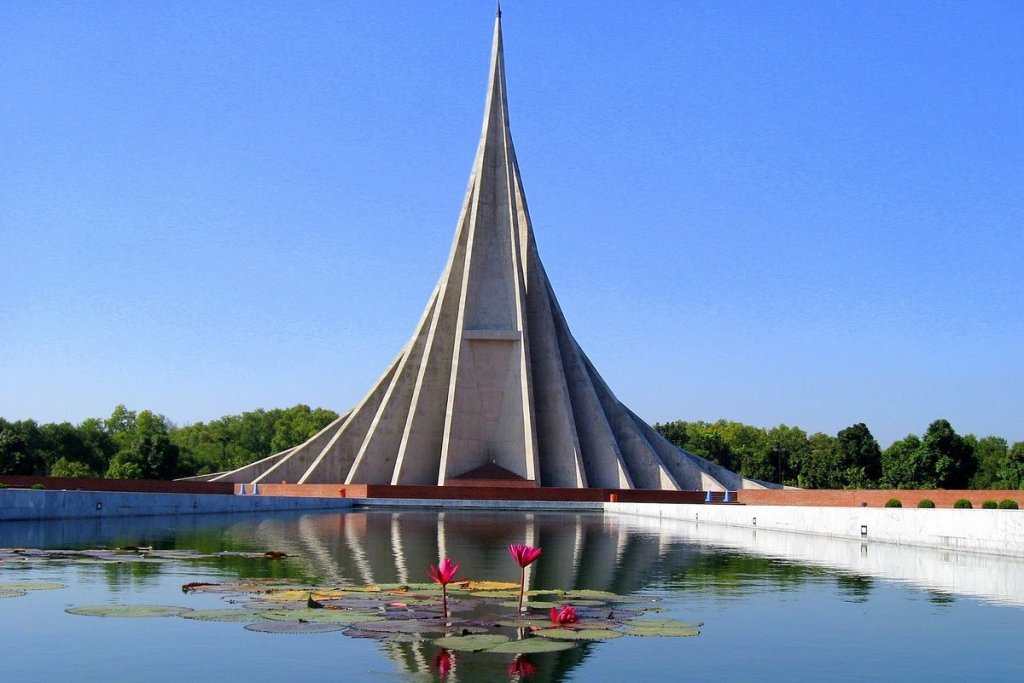
National Martyr’s Memorial (Jatiya Smriti Soudho) remembering 1971
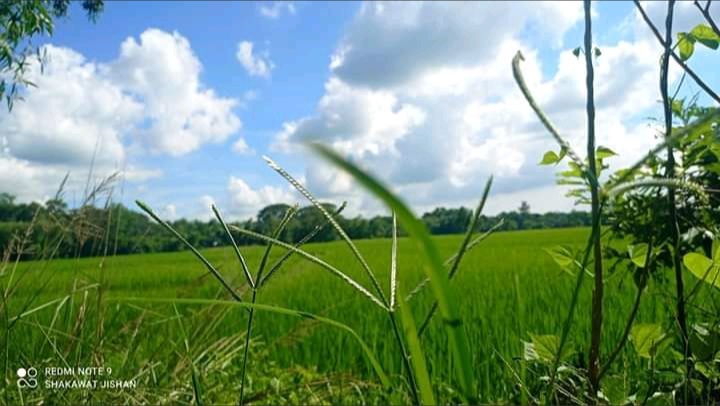
Evergreen rural Bangladesh
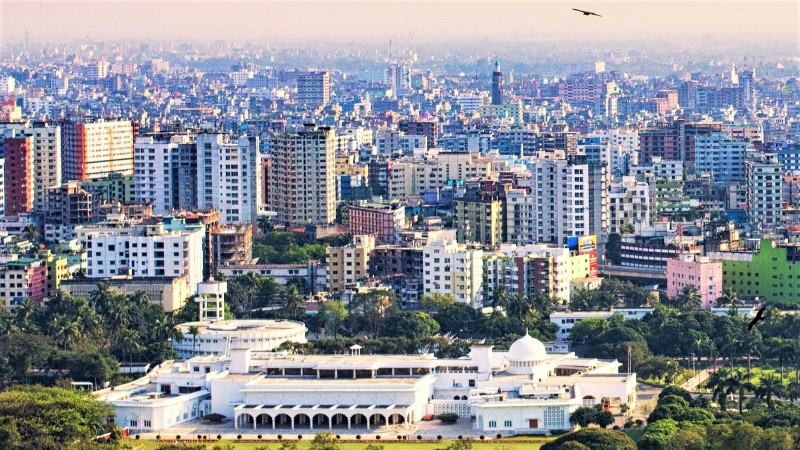
Modern urban Bangladesh
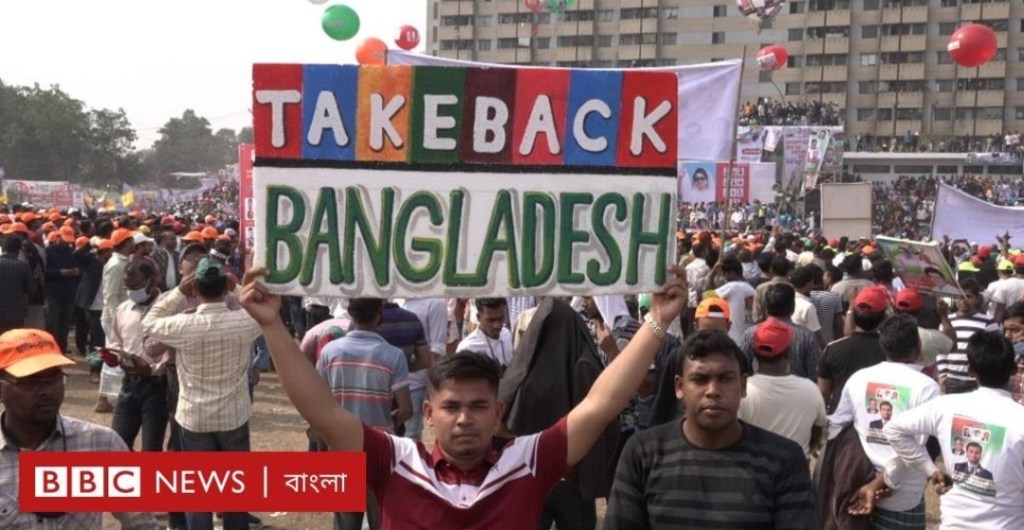
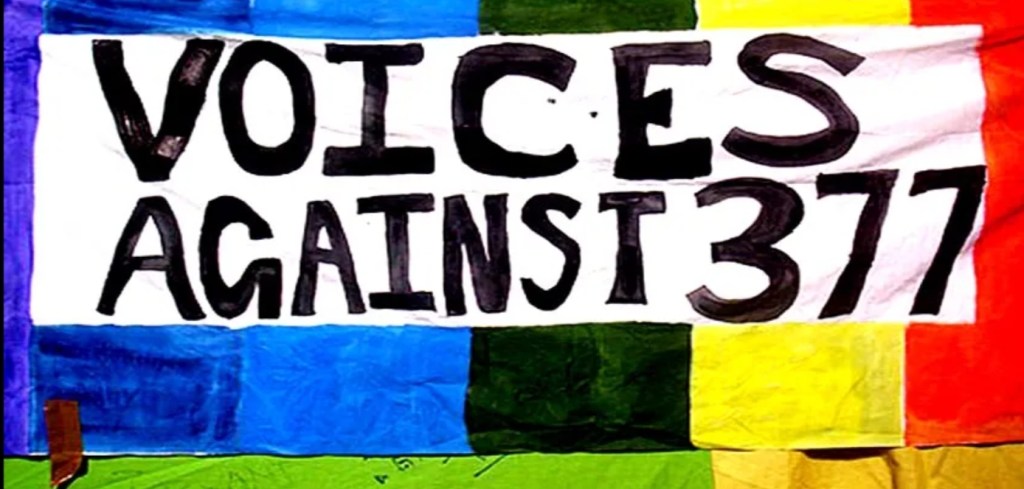
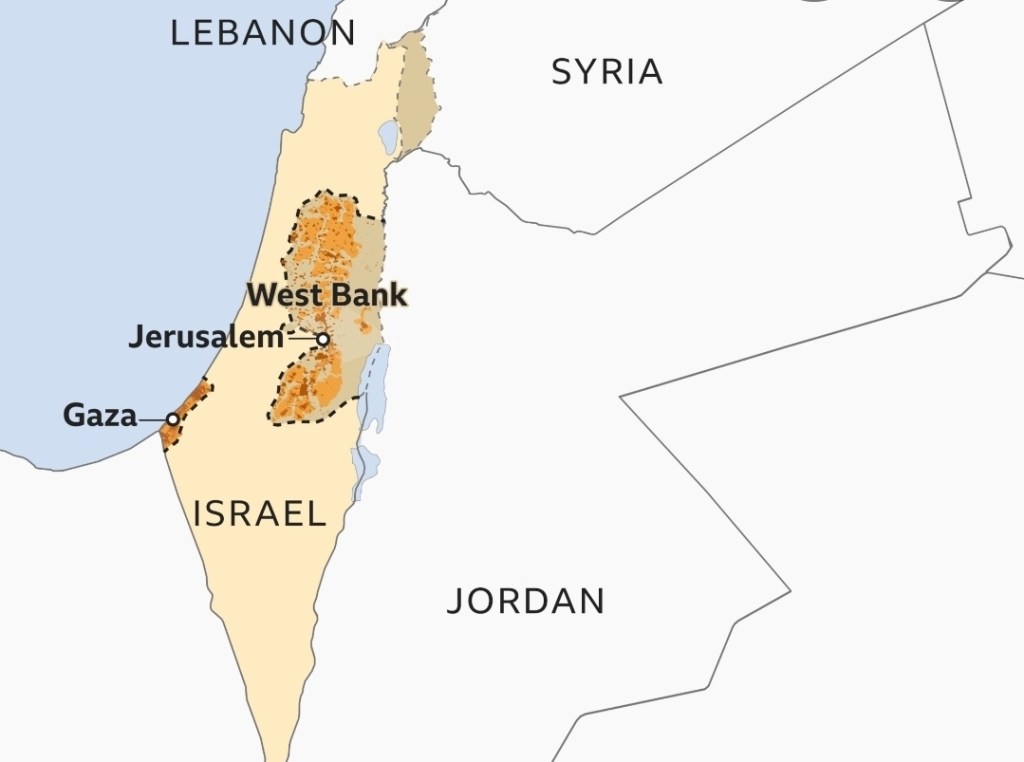


 রাষ্ট্রীয় ধর্মীয় নিরপেক্ষতা এবং ব্যক্তিগত ও রাষ্ট্রীয় গৌণ ধর্মীয়তা - State Religious Neutrality and Personal & State Peripheral Religiosity